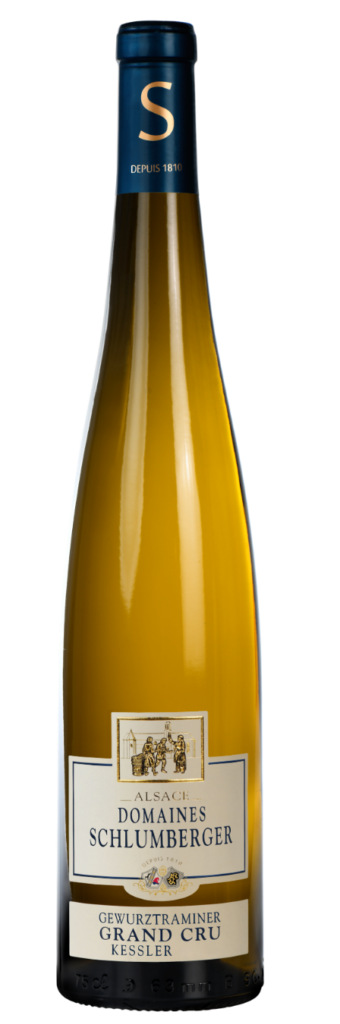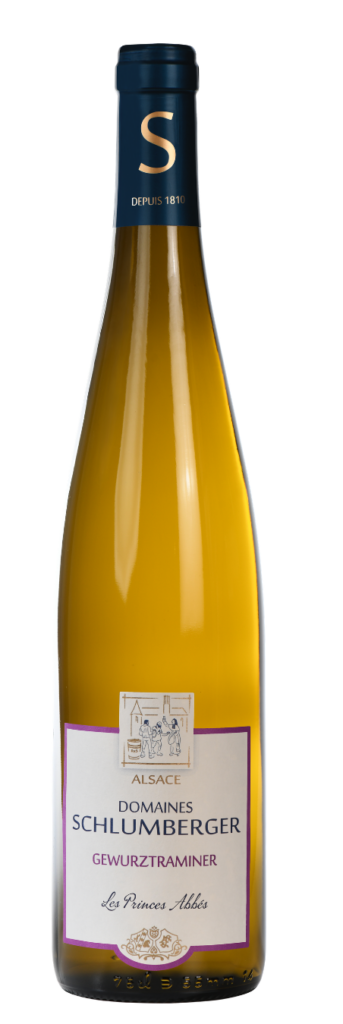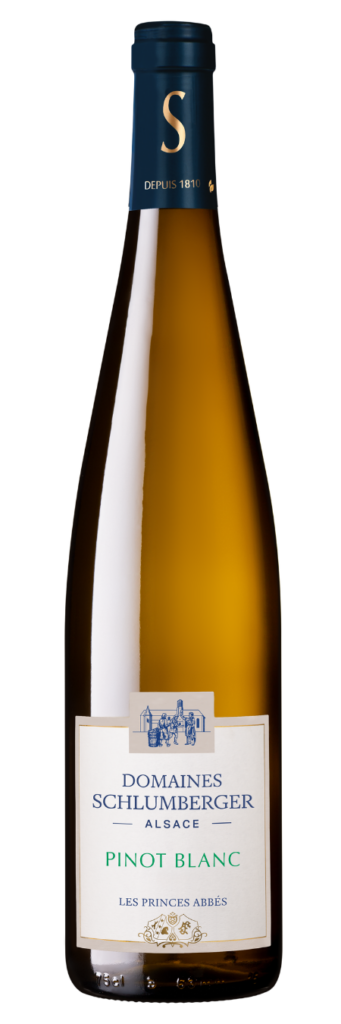
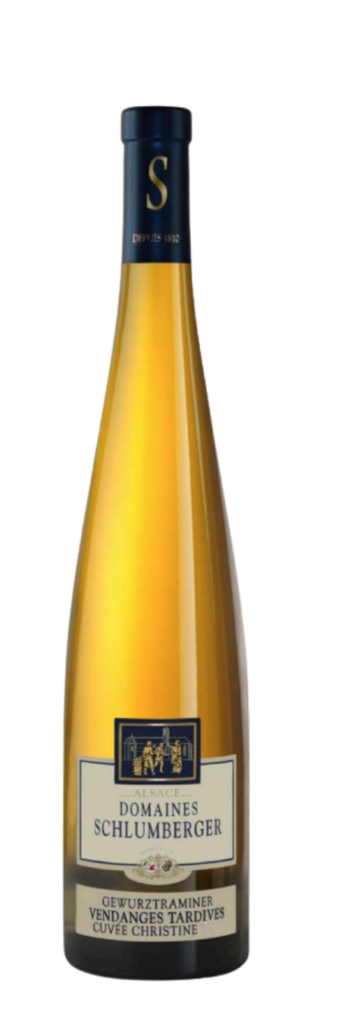
Schlumberger Cuvee Christine 2020

France
Alsace
Gewurztraminer, Pinot Blanc, Pinot Gris, Riesling
Organic Viticulture, Sustainable Certification
Sweet, Still, White
Domaines Schlumberger is a historic Alsace wine estate based in Guebwiller, France, founded in 1810 and known for estate-grown Riesling, Pinot Gris, Gewurztraminer and Alsace Grand Cru wines. With 140 hectares under vine, including significant holdings in Grand Cru Kitterlé, Kessler, Saering and Spiegel, Domaines Schlumberger is one of the most important names in Alsace, the estate offers a clear reference point for premium Alsace wine, combining scale, single-estate production, sustainable viticulture and distinctive hillside terroirs.
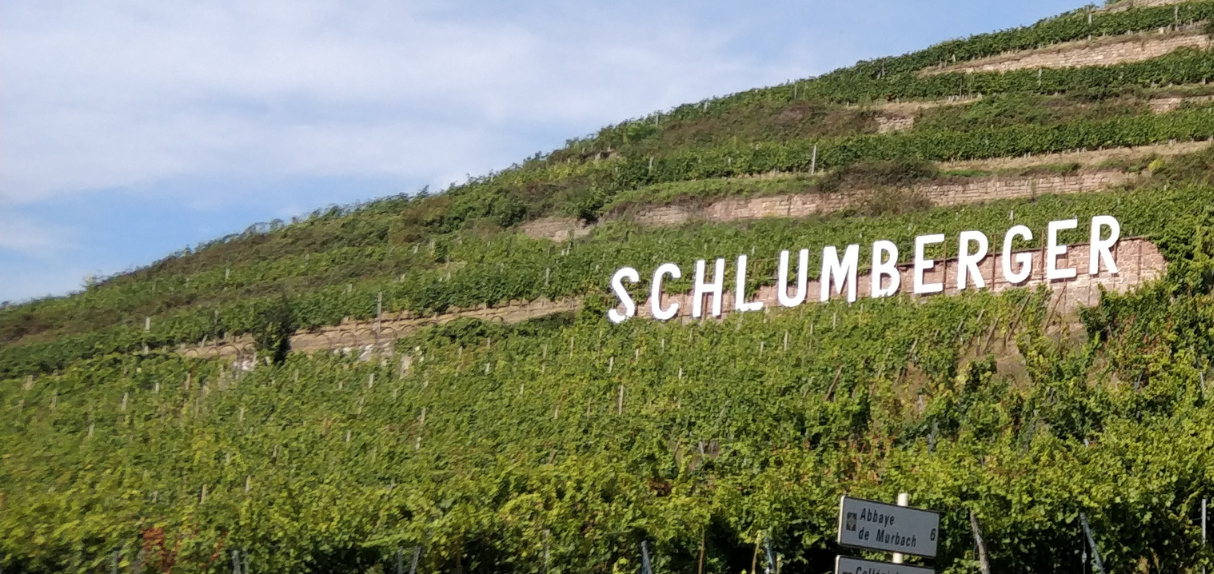
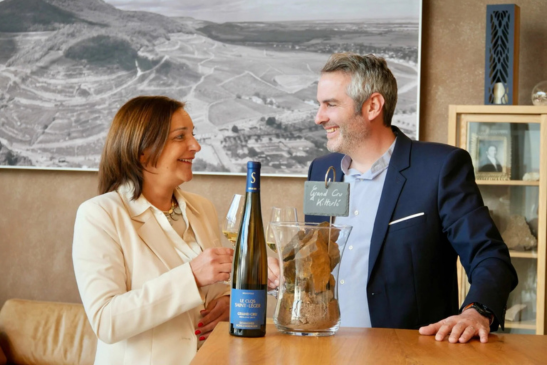
Domaines Schlumberger was founded in 1810 by Nicolas Schlumberger, who established vineyards on the slopes above Guebwiller in southern Alsace. The estate has remained closely connected to this historic town and its surrounding hillsides for more than two centuries. Today, the estate is run by Thomas and Séverine Schlumberger, the 7th generation of the family, being the driving force to preserve and develop its vineyard heritage.
The identity of Domaines Schlumberger is strongly shaped by continuity. Unlike many producers who work across fragmented holdings or rely on purchased fruit, Domaines Schlumberger is rooted in estate-grown production. This long-term ownership has allowed the family to build a detailed understanding of its slopes, soils, exposures and individual vineyard personalities.
The scale of Domaines Schlumberger is exceptional in Alsace. The estate is widely recognised as one of the region’s largest vineyard owners, with a particularly important presence in Grand Cru sites. This gives Schlumberger a rare ability to offer both classic varietal Alsace wines and more site-specific, terroir-led expressions from some of the region’s most distinctive hillside vineyards.
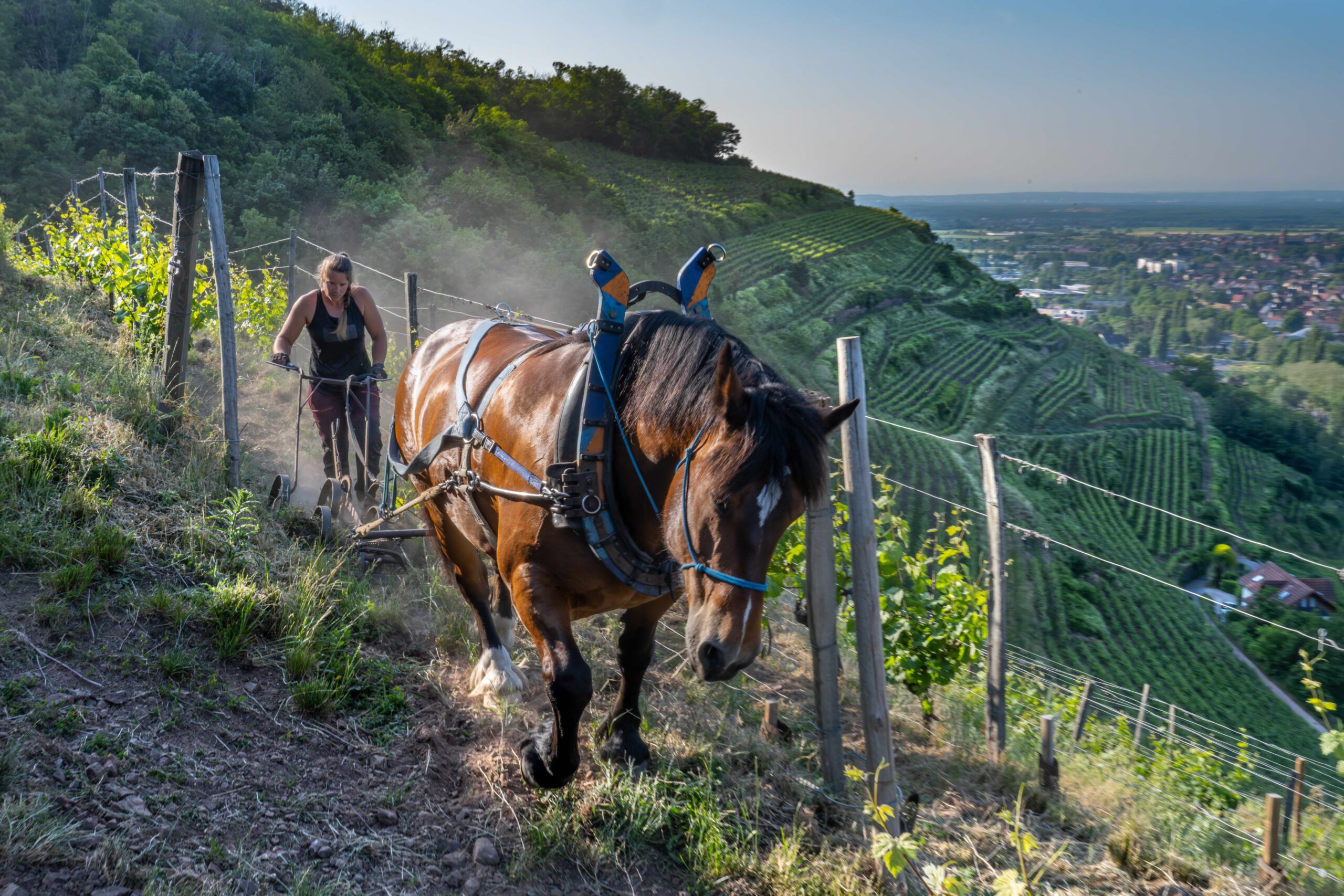
Domaines Schlumberger’s vineyards are located around Guebwiller, on the steep slopes at the foot of the Vosges Mountains. These hillside sites benefit from strong exposure, cooling air movement and complex soils, allowing the grapes to ripen slowly while retaining freshness and aromatic precision.
The vineyards are planted across challenging terrain, where steep gradients and dry-stone walls are part of the landscape. This environment requires careful vineyard work, but it also contributes to concentration, structure and a clear sense of origin in the wines.
What sets Domaines Schlumberger apart is its exceptional Grand Cru presence. Around half of its 140 hectares are spread across four Alsace Grands Crus: Kitterlé, Kessler, Saering and Spiegel. Each site brings a different expression of Alsace terroir.
Kitterlé is known for steep slopes, volcanic sandstone soils and wines with intensity, mineral drive and ageing potential. Kessler, shaped by its sheltered basin-like position, often gives wines with richness, balance and aromatic depth. Saering is especially associated with Riesling, producing precise, dry and finely structured wines. Spiegel contributes elegance, finesse and aromatic clarity. Together, these sites give Schlumberger one of the most complete Grand Cru portfolios in Alsace.
Domaines Schlumberger’s vineyard approach is based on long-term stewardship. The estate has followed sustainable management principles since 2003, and 30 hectares were converted to biodynamics in 2006. It also holds HVE Level 3 and Vignerons Engagés certification, reflecting a broader commitment to environmental responsibility, biodiversity and responsible estate management.
This work is especially important in a hillside region where soil preservation, erosion control and vine balance are central to quality. The estate’s dry-stone walls, steep slopes and low-yielding sites require detailed attention, helping to preserve both the landscape and the identity of each vineyard.
The wines of Domaines Schlumberger are vinified from estate-grown fruit, giving the team full control from vineyard to cellar. This is a significant advantage for consistency, traceability and terroir expression.
Winemaking is focused on clarity, balance and the natural character of Alsace varieties. Riesling is handled to preserve precision, acidity and mineral tension, while Pinot Gris and Gewurztraminer are shaped to express texture, aromatic complexity and depth. The Grand Cru wines are given the time and detail required to reflect their individual sites, while the Princes Abbés range offers a more accessible introduction to the estate’s varietal style.
Domaines Schlumberger produces still Alsace wines, primarily white, with a smaller red wine expression from Pinot Noir. The range includes classic Alsace varieties such as Riesling, Pinot Gris, Gewurztraminer, Muscat, Sylvaner and Pinot Blanc, alongside Grand Cru bottlings from Kitterlé, Kessler, Saering and Spiegel.
The wines are precise, aromatic and structured, with freshness, texture and a clear link to place. Riesling shows citrus, floral and mineral notes with excellent ageing potential, while Pinot Gris brings richness and spice. Gewurztraminer offers expressive aromatics, texture and concentration, particularly in Grand Cru and late-harvest styles.
Domaines Schlumberger offers a complete Alsace ladder from one estate. The Princes Abbés range supports premium by-the-glass and regional listings, while Grand Cru Riesling, Pinot Gris and Gewurztraminer add depth for fine dining, pairing menus and independent retail. Its scale and estate-grown model help fill Alsace gaps with consistency and authority.