Pio Cesare Barolo and Barbaresco 2022 Vintage Report: A precocious and resilient year
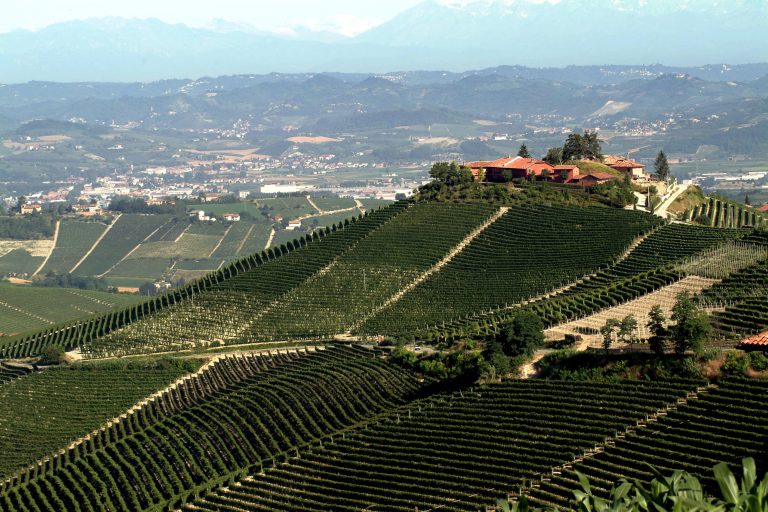
We are delighted to share the 2022 vintage report from Pio Cesare, highlighting the quality achieved in a challenging yet ultimately rewarding growing season.
2022 VINTAGE REPORT
A precocious and resilient year
Despite an advanced vegetative cycle compared to historical norms and challenging climatic conditions, the 2022 harvest has delivered excellent qualitative results. This is due not only to rigorous agronomic practices in our vineyards, but also to the resilience of the Langhe terroir and the remarkable adaptability of Nebbiolo.
Climatic Conditions
The most significant agronomic factor of the 2022 vintage was undoubtedly the limited water reserves in the soil, particularly during the early part of the season. Combined with elevated summer temperatures, this placed considerable stress on the vineyards.
Following approximately 150 mm of rainfall in November 2021, the winter was mild and dry, prompting an early vegetative awakening. Spring was unusually warm and dry until the end of May, when a significant weather system brought around 100 mm of rainfall.
Summer conditions were hot and humid, with June and July temperatures well above average, further accelerating vine physiology. Flowering occurred approximately 10 days earlier than usual.
August remained largely stable, with fine weather, milder temperatures, and only sporadic rainfall. September was once again sunny, with warm daytime temperatures and marked diurnal temperature variation, ideal conditions for Nebbiolo ripening.
Across the 2022 growing season, the most meaningful rainfall accumulation occurred during the summer months, with approximately 250 mm in the Barolo area and 350 mm in Barbaresco between May and September. While these rains provided essential relief, they often came in the form of intense thunderstorms.
To optimise water retention, our team undertook exceptional and proactive soil management between late May and early June. This included deep soil turnover and the incorporation of organic matter, allowing us to capture and retain as much rainfall as possible while maintaining soil aeration and structure.
Canopy management was equally critical. We chose to protect the grape clusters with leaf cover, reducing the risk of overheating and sunburn. Anti-hail nets were used to increase shading, and green harvesting was both advanced and intensified, reducing yields (in some warmer sites down to 50–55 quintals per hectare) to balance the vines under conditions of water stress and heat.
These interventions ensured vigorous vegetative development, which proved essential for optimal grape ripening. By harvest, the vineyards were in excellent health: leaves remained green even in the fruiting zone, and the grapes showed no signs of stress.
Nebbiolo
Budbreak for Nebbiolo began around mid-March, approximately 15 days earlier than in 2021, with flowering and veraison following suit in mid-May and mid-July respectively.
Despite this early start, harvest timing was less advanced than expected, with a total vegetative cycle of approximately 190 days.
There were notable climatic differences between Barolo and Barbaresco, with Barbaresco experiencing slightly cooler temperatures and more intense summer storms. However, these variations did not translate into significant analytical or sensory differences at harvest, aside from those attributable to individual vineyard characteristics.
Even in such a dry vintage, early and rigorous green harvesting proved decisive. Final thinning took place just weeks before harvest, deliberately reducing yields to ensure vine health and consistent quality regardless of climatic conditions.
Thanks to intensive vineyard work throughout the summer and meticulous sampling (visual, sensory, and analytical), harvest was approached with confidence.
The harvest itself was short and concentrated, with relatively close picking dates across different vineyards and without the dramatic yield losses initially feared.
In the Barbaresco area, Nebbiolo was harvested between 21 September and 4 October.
In Barolo, harvesting began on 25 September in the Ornato amphitheatre in Serralunga d’Alba, continuing across other estate vineyards and concluding on 5 October in La Morra.
Tasting Notes
Thanks to the precision work carried out both in the vineyard and winery, the 2022 Barolo and Barbaresco wines display excellent balance between fruit concentration and freshness, with firm tannins and solid structure.
Barbaresco shows more floral nuances, reflecting slightly higher water availability and soils with a different composition, while Barolo expresses more smoky and mineral notes, consistent with its more compact white marl soils and warmer summer conditions.
For our family, it is essential that each wine faithfully reflects the nuances of its terroir while respecting the intrinsic character of Nebbiolo. Where necessary, our winemaking approach is adapted to the specific conditions of each vintage.
In 2022, vinifications were conducted with a gentler and more delicate approach, using slightly shorter macerations and moderate temperatures to extract refined, elegant tannins.
Following approximately 24 months of ageing, primarily in large oak casks (French, Austrian, and Slavonian) with a small proportion in barriques, extended bottle ageing proved crucial in achieving wines that are harmonious, approachable in youth, yet capable of long ageing, in line with Nebbiolo’s inherent longevity.
Barolo Pio and Barbaresco Pio 2022
Our traditional approach for producing Barolo Pio and Barbaresco Pio—our flagship wines since 1881—relies on the pre-fermentation blending of Nebbiolo grapes sourced from different exposures, all classified as MGA (Menzioni Geografiche Aggiuntive), from our family-owned vineyards:
Barolo Pio:
Ornato, Serra, Briccolina, and Lirano (Serralunga d’Alba); Mosconi (Monforte d’Alba); Ravera (Novello); Roncaglie (La Morra); Gustava and Garretti (Grinzane Cavour)
Barbaresco Pio:
Bricco di Treiso, Bongiovanni, and San Stunet (Treiso); Rocche Massalupo (Alba – San Rocco Seno d’Elvio)